Daily Stretching Routine for Home Office and Remote Work
Evidence-based exercises and stretches designed by physical therapists to combat the musculoskeletal effects of prolonged sitting and maintain optimal function while working remotely.
Damian Jankowski, PT, DPT, MBA
January 15, 2026
15 min read
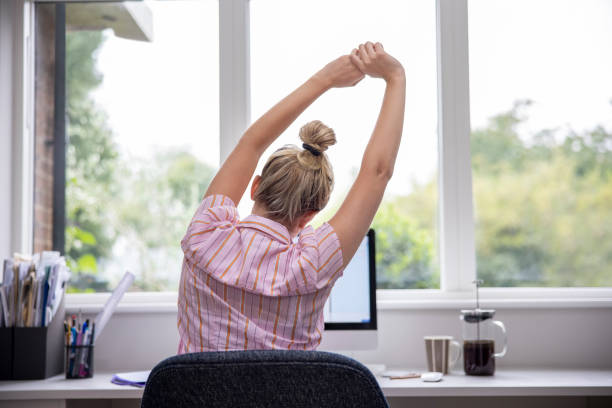
Understanding the Physical Impact of Desk Work
Prolonged sitting and repetitive computer work place significant stress on your musculoskeletal system. Research shows that static postures maintained for more than 20-30 minutes can lead to muscle fatigue, reduced circulation, and increased intramuscular pressure. Common issues include upper crossed syndrome (forward head posture with rounded shoulders), lower crossed syndrome (anterior pelvic tilt with weak glutes), and thoracic hyperkyphosis (excessive upper back rounding).
The human body is designed for movement, not sustained static positions. When muscles remain in shortened or lengthened positions for extended periods, they develop altered length-tension relationships, leading to muscle imbalances, decreased flexibility, and increased injury risk. The exercises outlined below are designed to counteract these specific adaptations.
This is for educational purposes only and is not considered professional medical advice. Always follow the guidance of your healthcare providers regarding your specific condition and recovery plan or contact a physical therapist for a personalized evaluation.
Exercise Prescription Principles for Desk Workers
As physical therapists, we recommend following these evidence-based principles when implementing your daily exercise routine:
- Frequency: Perform mobility exercises every 30-45 minutes during your workday. This breaks up prolonged static postures and maintains tissue extensibility.
- Movement Before Stretching: Always perform gentle movement before static stretching. Cold tissues are more prone to injury and respond poorly to stretching.
- Controlled Breathing: Maintain diaphragmatic breathing during all exercises. Breath-holding increases intrathoracic pressure and muscle tension.
- Pain-Free Range: Work within comfortable ranges. Stretching should create a sensation of gentle tension, never sharp pain. Pain indicates tissue stress beyond therapeutic levels.
- Progressive Loading: Gradually increase duration and intensity. Tissues adapt slowly; aggressive progression leads to irritation.
Comprehensive Daily Exercise Program
The following exercises target specific musculoskeletal adaptations from desk work. Perform this routine 2-3 times daily, with additional mobility breaks every 30-45 minutes.
Cervical Spine and Upper Trapezius
- Chin Tucks (Cervical Retraction): Sit upright with neutral spine. Draw your chin straight back, creating a "double chin" without tilting your head up or down. This activates deep cervical flexors and counteracts forward head posture. Hold 5 seconds, perform 10 repetitions every hour. You should feel gentle activation in the front of your neck, not strain.
- Upper Trapezius Stretch: Sit on your right hand to stabilize the shoulder girdle. Tilt your head to the left, bringing your left ear toward your left shoulder. For increased stretch, gently place your left hand on the right side of your head (no pulling, just light overpressure). You should feel stretch along the right side of your neck. Hold 30 seconds, perform 3 repetitions each side, 2-3 times daily. This addresses upper trapezius hypertonicity from sustained keyboard positioning.
- Levator Scapulae Stretch: Turn your head 45 degrees to the left, then tilt your nose down toward your left armpit. Place your left hand on the back of your head for gentle overpressure. You should feel stretch along the back-right aspect of your neck. Hold 30 seconds, 3 repetitions each side. This targets the muscle connecting your neck to shoulder blade, commonly tight in desk workers.
Thoracic Spine and Shoulder Girdle
- Thoracic Extension Over Chair: Sit at the front edge of your chair. Interlace fingers behind your head, elbows pointing forward. Slowly extend your upper back over the backrest, opening your chest toward the ceiling. Hold 10 seconds, return to neutral, repeat 5 times. This mobilizes thoracic spine into extension, counteracting the flexed posture from computer work. Avoid excessive neck extension; the movement should come from your mid-back.
- Scapular Retraction ("Shoulder Blade Squeezes"): Sit upright, arms at sides. Draw your shoulder blades back and down, as if pinching a pencil between them. Focus on depressing (lowering) your shoulders away from your ears while retracting. Hold 5 seconds, perform 10 repetitions. This activates middle and lower trapezius and rhomboids, combating protracted scapulae from forward reaching postures. Perform every 30-45 minutes.
- Pectoralis Doorway Stretch: Stand in a doorway or corner. Place forearms on doorframe with elbows at 90 degrees, positioned slightly below shoulder height. Step forward with one foot until you feel a stretch across your chest. Hold 30-45 seconds, 3 repetitions. This lengthens pectoralis major and minor, which become adaptively shortened from rounded shoulder postures. Variations: Adjust arm height to target different pectoralis fibers (higher = lower fibers, lower = upper fibers).
Wrist and Forearm
- Wrist Flexor Stretch: Extend your right arm forward, palm facing up. Use your left hand to gently extend your right wrist, pulling fingers back toward your body. Keep your elbow fully extended to engage the entire flexor muscle group. Hold 30 seconds, 3 repetitions each side. This addresses flexor carpi radialis and ulnaris tightness from sustained typing. You should feel stretch along the palm-side of your forearm.
- Wrist Extensor Stretch: Extend your right arm forward, palm facing down. Make a gentle fist. Use your left hand to flex your right wrist, pointing knuckles toward the floor. Keep elbow extended. Hold 30 seconds, 3 repetitions each side. This targets extensor carpi radialis and ulnaris, which can become overworked from mouse use.
- Median Nerve Glide: Extend right arm to side at shoulder height, palm facing forward. Tilt your head away (to the left). Slowly extend your wrist (hand back) and flex your wrist (hand forward) in a gentle pumping motion, 10-15 repetitions. This neural mobilization exercise helps prevent median nerve compression and carpal tunnel symptoms. Never force range; this should be comfortable.
Hip Flexors and Lumbar Spine
- Seated Hip Flexor Stretch: While seated, scoot to the front edge of your chair. Extend your right leg behind you, placing the ball of your foot on the ground. Keep your left knee bent at 90 degrees. Maintain upright posture and gently tuck your pelvis under (posterior pelvic tilt) until you feel stretch in the front of your right hip. Hold 30 seconds, 3 repetitions each side. This addresses iliopsoas and rectus femoris adaptive shortening from prolonged hip flexion.
- Seated Figure-4 Hip Stretch (Piriformis): Sit upright. Cross your right ankle over your left knee, creating a "4" shape. Maintain a straight spine and lean forward from your hips (not your back) until you feel stretch in your right glute. Hold 30 seconds, 3 repetitions each side. This mobilizes hip external rotators including piriformis, which can contribute to sciatic nerve irritation when tight.
- Cat-Cow Spine Mobilization: If space allows, position on hands and knees (or perform a modified version leaning forward in your chair). Alternate between arching your back (looking up, "cow") and rounding your back (tucking chin, "cat"). Move slowly through full available range. Perform 10 cycles. This mobilizes the entire spine through flexion and extension, promoting healthy disc nutrition through fluid exchange.
- Seated Lumbar Rotation: Sit upright with feet flat. Place your right hand on the outside of your left knee. Rotate your torso to the left, using your arm for gentle overpressure. Keep your hips facing forward; movement should come from your spine. Hold 20-30 seconds, 3 repetitions each direction. This maintains rotational mobility in lumbar and thoracic spine.
Lower Extremity Circulation and Activation
- Ankle Pumps: While seated, lift your toes toward your shins (dorsiflexion), then point them away (plantarflexion). Perform 20 repetitions every hour. This activates the calf muscle pump, enhancing venous return and reducing risk of deep vein thrombosis from prolonged sitting.
- Seated Glute Squeezes: While seated, contract your gluteal muscles as firmly as possible. Hold 5 seconds, relax 5 seconds, repeat 10 times. Perform several times throughout the day. This combats gluteal amnesia (inhibition) that develops from prolonged sitting on these muscles.
- Standing Hip Extension: Stand behind your chair, hands on backrest for balance. Keeping your knee straight and core engaged, extend your right leg behind you, squeezing your glute. Do not arch your lower back. Hold 2 seconds, return to start. Perform 10-15 repetitions each leg, 2-3 times daily. This activates gluteus maximus and counteracts hip flexor dominance.
Exercise Integration Throughout Your Workday
Exercise adherence is the primary predictor of outcomes. Structure your day to make movement automatic:
- Morning Activation (5-7 minutes): Before starting work, perform the complete thoracic, hip, and shoulder routine to prepare your body for sustained postures. This establishes optimal starting alignment.
- Hourly Micro-Breaks (2-3 minutes): Set a timer for every 50-60 minutes. Stand, perform 10 chin tucks, 10 scapular retractions, 20 ankle pumps, and 10 glute squeezes. This maintains muscle activation and circulation.
- Mid-Day Full Routine (10-12 minutes): Perform the complete exercise program during lunch or mid-afternoon. This resets posture and addresses accumulated tissue stress.
- Standing Meetings and Calls: Whenever possible, take phone calls standing. Perform gentle hip flexor stretches or march in place during longer calls to maintain lower extremity circulation.
- End-of-Day Recovery (5-7 minutes): After work, perform stretching focused on areas of greatest tension. This promotes parasympathetic activation and tissue recovery.
- Movement Snacking: Between formal exercise sessions, incorporate brief movements: shoulder rolls while reading emails, wrist stretches during loading screens, neck rotations between tasks.
Warning Signs to Monitor
While these exercises are safe for most individuals, consult a physical therapist if you experience:
- Radiating Pain: Pain that travels down your arm or leg may indicate nerve compression requiring professional evaluation.
- Persistent Symptoms: Discomfort lasting more than 2 weeks despite exercise adherence warrants assessment to identify underlying pathology.
- Progressive Weakness: Difficulty gripping objects, dropping items, or leg weakness requires immediate evaluation.
- Numbness or Tingling: Persistent paresthesias, especially if progressive or affecting multiple areas, may indicate nerve involvement.
- Sharp Pain During Exercise: Stretching should create gentle tension. Sharp pain indicates you're exceeding tissue tolerance.
How Touchpoint PT Can Help
At Touchpoint PT, we take a comprehensive approach to addressing your low back pain and overall musculoskeletal health. Our team of experienced physical therapists can help you by:
- Free consultation: We offer a free 10-minute initial consultation to discuss your goals and determine if telehealth PT is the right fit for you.
- Posture Evaluation: We can assess your posture to identify any imbalances or misalignments that may be contributing to your discomfort.
- Core and Extremity Strength Assessment: Our therapists evaluate the strength and stability of your core and extremities to develop a personalized exercise plan that supports your spine and reduces strain.
- Specialized Education: We provide tailored guidance on workplace and home environment modifications to optimize ergonomics, reduce pain, and prevent future injuries.